
Positive Behaviour Support: A Family Guide
Learn what Positive Behaviour Support is, how a Behaviour Support Plan works under the NDIS, and what families should expect from the process.
Myxa Team1 May 2026 · 13 min read
Read the guideSIL funds the support you receive. SDA funds the housing itself. Learn how each works, how they're funded, and what to ask providers.
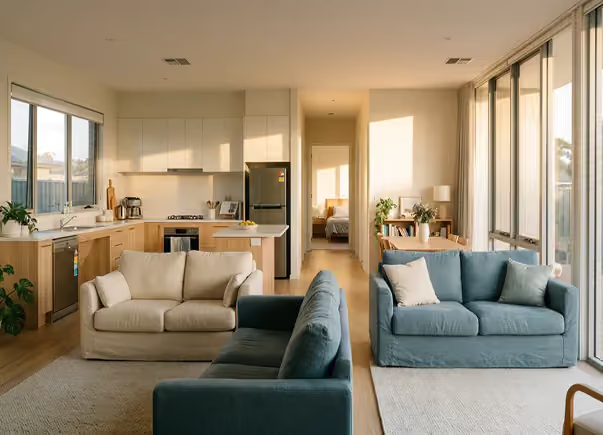
If you are exploring NDIS housing options for yourself or someone you support, you have probably come across the terms SIL and SDA. They sound similar, they often appear in the same conversations, and they are regularly confused with each other.
That confusion is understandable. Both SIL and SDA relate to where and how a person with disability lives. But they are fundamentally different things, funded through separate NDIS budget lines, and managed by different types of providers.
This post breaks down what each one means, how the funding works, how they relate to each other, and what questions to ask when you are exploring options.
Supported Independent Living is the support a participant receives to live in a shared or individual home. It covers the people and the services: the disability support workers who are there to provide assistance with daily tasks, build independent living skills, and ensure safety.
SIL typically includes support with things like meal preparation, personal care, household tasks, medication management, community access, and overnight assistance where needed. The level of support depends on the participant's individual support needs and goals.
SIL is not a type of housing. It is not the building or the lease. It is the trained team of people who provide consistent, person-centred support within whatever home the participant lives in.
SIL is funded under the Core Supports budget in an NDIS plan, specifically under the Assistance with Daily Life category. The NDIA determines a participant's SIL funding based on a detailed assessment of their support needs, including the type and amount of support required across a typical week.
For a deeper look at how SIL works in practice, visit our Supported Independent Living page.
Specialist Disability Accommodation is the housing itself. It refers to a specific category of purpose-built or modified dwellings designed for people with extreme functional impairment or very high support needs.
SDA properties are built to meet the NDIS SDA Design Standard. They include physical features that make it easier and safer for residents to live independently and for support to be delivered effectively. These might include wider doorways, reinforced walls, ceiling hoists, accessible bathrooms, sensory design features, or assistive technology integration, depending on the design category.
SDA is funded under the Capital Supports budget in an NDIS plan, under the Home Modifications category. It is a separate funding stream from SIL, and eligibility is assessed independently.
Not every NDIS participant qualifies for SDA. According to the NDIS, SDA is designed for a relatively small number of participants with the highest support needs. Most participants access housing through the private rental market, home ownership, or social housing, with SIL or other supports delivered in that setting.
This is one of the most important distinctions to understand. SIL and SDA sit under completely different NDIS budget categories:
They are assessed separately, funded separately, and managed separately. A participant can have one without the other, and many do.
Yes. This is actually the more common arrangement. Many participants receive SIL in homes that are not classified as SDA. These might be standard rental properties, homes owned by a participant's family, or other shared living arrangements.
The key point is that SIL funding pays for the support delivered inside the home, regardless of what type of property it is. You do not need to live in an SDA property to receive SIL.
Yes. Some participants live in SDA properties and receive their day-to-day support through other NDIS funding categories, such as Core Supports delivered as individual in-home support rather than as a SIL arrangement. The housing is SDA, but the support model may be different.
That said, most participants who qualify for SDA also receive SIL, because the level of need that qualifies someone for specialist housing often also requires the structured, around-the-clock support that SIL provides.
SDA properties are built to one of four design categories, as set out in the SDA Rules (2020) and the NDIS SDA Design Standard:
The design category a participant is approved for depends on their individual assessment and the nature of their support needs.
When a participant has both SIL and SDA in their NDIS plan, the two work together to create a complete living arrangement:
The SDA provider is responsible for the property: maintenance, compliance with design standards, and tenancy management. The SIL provider is responsible for the support: staffing, training, support planning, and service delivery.
In many cases, the SDA provider and the SIL provider are different organisations. This is worth knowing because it means you may need to coordinate between two providers when setting up a living arrangement.
Myxa is registered as both a SIL provider and an SDA provider. In line with our obligations under the NDIS Practice Standards, we treat these as distinct services. When a participant requires SDA housing, we work with independent SDA providers to ensure the housing decision is made purely on what suits the participant, not what suits us. Our primary focus in any SIL arrangement is the quality of support delivered inside the home. Where Robust SDA is part of the picture, we deliver SIL within Robust SDA properties across Melbourne, Bendigo, and Geelong.
Whether you are a participant, a family member or representative, or a support coordinator, here are some useful questions to ask when navigating SIL and SDA options.
About SIL
About SDA
About both
Asking these questions early can save significant time and reduce confusion down the track.
The distinction between SIL and SDA is one of the most common points of confusion in NDIS housing. Getting clear on what each one covers, how they are funded, and how they work together is an important first step in making informed decisions.
If you are exploring Supported Independent Living options and want to understand what Myxa's approach looks like in practice, visit our SIL service page or get in touch with our team.
For support coordinators looking for detailed information about referral pathways, visit our support coordinator page. Participants and families can learn more about what to expect on our participant information page.
You've reached the end of the guide.
Back to the start
Tap a card to switch it on, tap again to change it.
Speed changes apply on the next play.
Your browser doesn't support read-aloud. Try Chrome, Edge, or Safari.

We use cookies and similar technologies to make this site work, understand how it's used, and improve our advertising. See our Privacy Policy. You can change your preferences any time via Manage.
